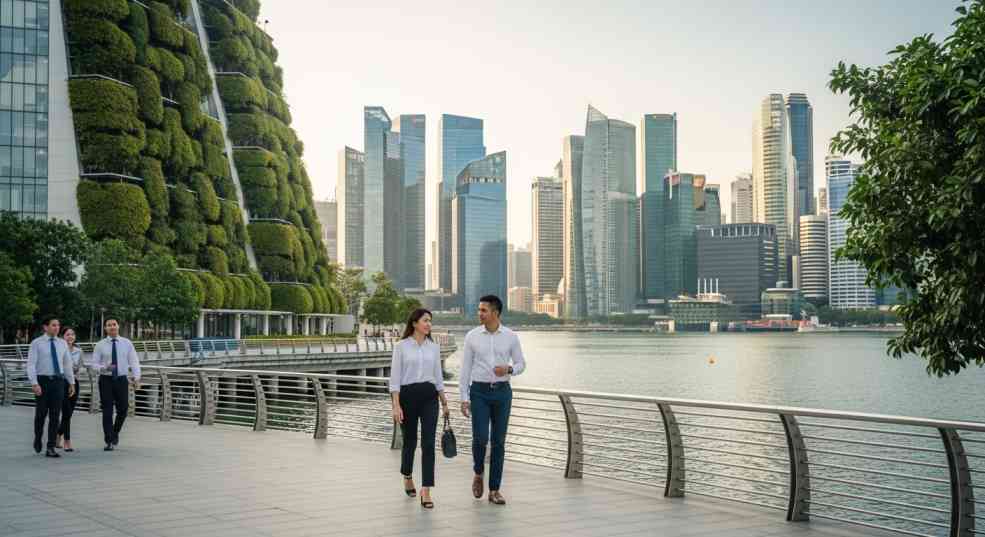
It is six in the evening at Raffles Place and the sea of white shirts is moving just a little bit faster than you remember. Back then, this energy felt like a pulse you could dance to, but lately, it feels more like a treadmill that keeps ticking up in speed. You find yourself standing on the platform, letting three trains go by just to avoid the squeeze, wondering when the city started feeling quite this heavy. It is a quiet realization that hits many of us as we move out of our roaring twenties and into the reality of middle age here. Growing old in Singapore is not just about the birthdays, it is about the subtle shift in how the island treats you.
The humidity used to be a minor inconvenience that we laughed off while hopping between air conditioned malls. Now, that same damp heat feels like a physical weight on the shoulders the moment you step out of the door. There is a specific kind of fatigue that starts to settle in when you have spent two decades running the race in one of the fastest cities on the planet. The city has not changed its tempo, but our ability to recover from the grind certainly has.
The relentless rhythm of the morning commute
There was a time when a cross island trip from Jurong to Pasir Ris felt like an adventure. Now, the thought of the morning peak hour is enough to induce a heavy sense of dread before the alarm even rings. Singapore lifestyle stress is often tied to this feeling of being constantly on the move, squeezed into tight spaces with thousands of others who are just as tired as you are. The patience we once had for the train delays or the slow walkers has worn thin.
As we get older, we crave space and quiet, two things that are in very short supply during a Singaporean Tuesday. The noise of the city seems to have been turned up a few decibels. The clatter of the food center, the construction that never seems to end, and the high pitched chime of the MRT doors start to feel less like the sounds of progress and more like a drain on our energy. We find ourselves seeking out the pockets of green in the Botanic Gardens or the quiet corners of a library just to breathe.
When the social circle starts to shrink
In our younger years, social life in Singapore revolved around the next big opening or a late night out at Clarke Quay. We had the stamina to stay out until the early hours and still make it to the office with nothing but a strong coffee. These days, the group chats are quieter. Invitations are often met with a rain check because someone is staying late at the office or the kids have a tuition class that cannot be missed.
Maintaining those connections feels like a mountain to climb when you are already exhausted from a fifty hour work week. The spontaneity is gone, replaced by dinner plans made three weeks in advance that still get cancelled at the last minute. This social thinning can be isolating, making the city feel larger and less personal than it did when we were younger and more connected to the hive mind.
The city does not slow down for us. It keeps its twenty something energy while we are just looking for a comfortable place to sit and a conversation that does not revolve around work.
The rising tide of daily expenses
It is impossible to talk about aging here without mentioning the cost of living SG. When you are twenty, you can live on hawker food and cheap beer. As you get older, the stakes get higher. There are insurance premiums to consider, elderly parents who might need specialized care, and the looming question of whether the CPF will truly be enough for the lifestyle you want to lead.
Every trip to the supermarket feels like a lesson in inflation. The numbers on the receipt creep up while the energy to work more hours to cover them creeps down. This financial pressure adds a layer of anxiety that sits in the back of the mind. It is the cost of staying in the game, and as we age, that entry fee feels increasingly steep. We start to look at the glossy brochures of retirement life and wonder if they were written for a different version of us.
Why the mental load feels heavier now
Perhaps the hardest part of all is the mental health Singapore aspect of growing up in a meritocracy. There is a constant, nagging pressure to remain relevant in a workforce that is always looking for the next young thing. The fear of being left behind by technology or a faster, hungrier generation is real. It creates a state of perpetual alertness that is incredibly taxing over the long term.
We spend so much time worrying about the future that we forget how to enjoy the present. The mental load of managing a household, a career, and the expectations of a high achieving society can lead to a quiet kind of burnout. We are not just physically tired, we are soul tired. We look for ways to disconnect, but the city is designed to keep us plugged in at all times.
The heat will always be there and the trains will always be full, but the way we choose to move through this space has to change. We eventually learn that it is okay to step off the treadmill for a while. Singapore is a beautiful, bright, and bustling home, but as we grow older, we realize that the most important part of living here is finding a way to make it feel a little bit smaller and a lot more quiet.
Maybe it is not the city getting harder, but us finally learning the value of our own peace.