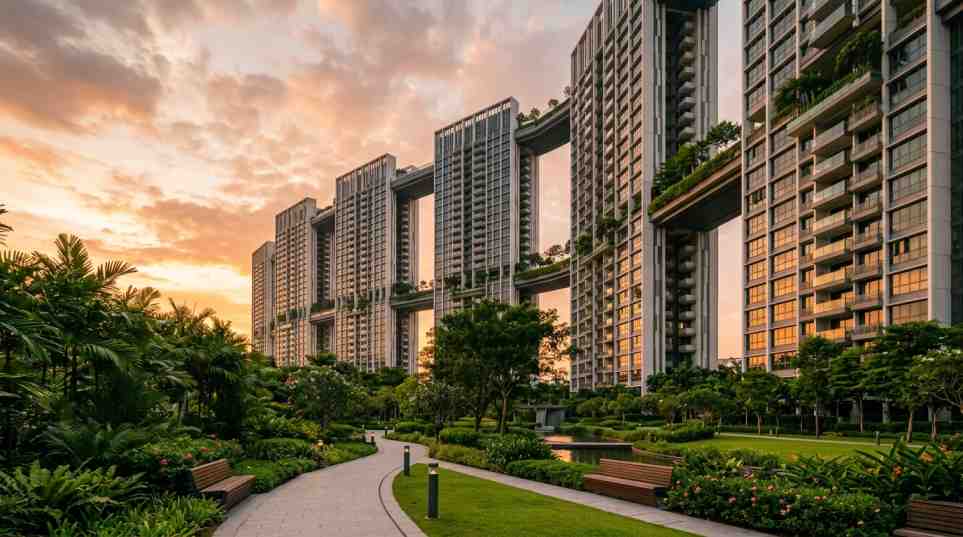
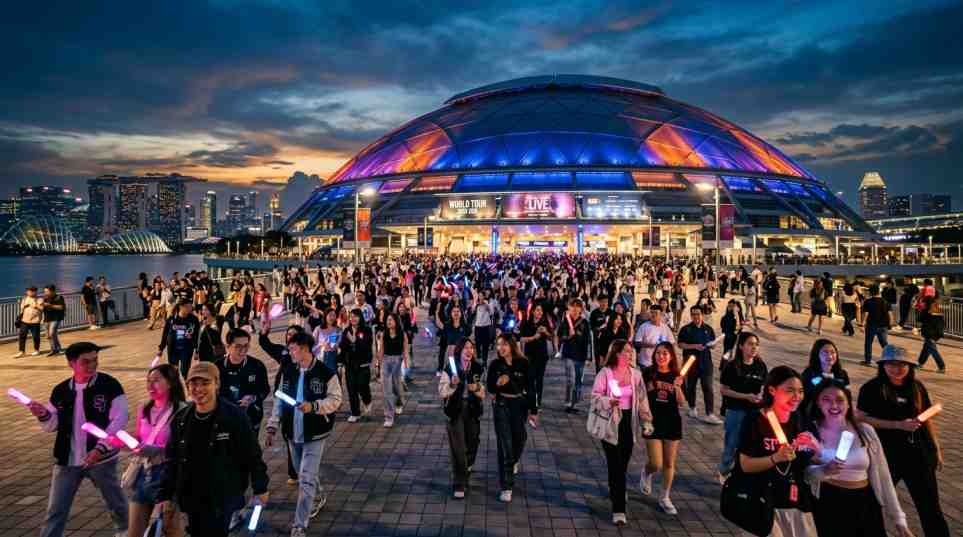
If you ever find yourself sitting at a sidewalk cafe in Singapore or a rooftop bar in Kuala Lumpur at seven in the evening, you might notice something unusual. The sun is still surprisingly high in the sky. While most places at this longitude would be shrouded in twilight, these two neighbors are bathed in a lingering golden hour that feels like it belongs much further east. This quirky phenomenon is not a trick of the light but the result of a deliberate and fascinating choice made decades ago.
The Colonial Foundations of Time
To understand why the clocks here are set the way they are, we have to look back at the days of British colonial rule Singapore. During the early part of the twentieth century, time was a far more local affair. Sailors and colonial administrators relied on the local mean time, which was determined by the position of the sun directly above the meridian of the location. For Singapore, this naturally placed the region at roughly seven hours ahead of Greenwich Mean Time.
The British authorities eventually sought to standardize this to make administration easier. In the early nineteen hundreds, the region officially adopted a time that was seven hours ahead of London. However, the seeds of change were already being sown. As the world became more interconnected through telegraphs and shipping, the need for a more practical alignment grew. There was a constant push and pull between the natural cycle of the sun and the artificial requirements of a growing global empire.
A History of Shifting Clocks
The Singapore time zone history is marked by a series of jumps and adjustments. It was not a simple linear progression from one hour to the next. Instead, it was a series of experiments driven by everything from daylight savings attempts to the brutal realities of war. During the period of the Japanese occupation in the nineteen forties, the clocks were abruptly moved forward by one hour and thirty minutes to align with Tokyo time. When the war ended, the clocks moved back, but they never quite returned to where they started.
By the middle of the century, the region settled on being seven and a half hours ahead of London. This was seen as a comfortable compromise that allowed for more daylight in the evenings, helping people enjoy leisure activities after work. It remained this way for several decades, even as Singapore and Malaysia moved through the era of independence and began to forge their own paths on the global stage.
The Divergence of the Seventies
During the nineteen seventies, a strange logistical gap began to emerge. West Malaysia and Singapore were on the same clock, but East Malaysia, which includes Sabah and Sarawak, was thirty minutes ahead. This created a peculiar internal friction for the Malaysian nation. Business travelers flying from Kuala Lumpur to Kota Kinabalu had to reset their watches for a flight that stayed within the same country.
The Push for Synchronization
The Malaysian government realized that having two different time zones was a hindrance to national unity and administrative efficiency. There was a clear need to bring the peninsula and the eastern states into one single rhythm. This realization set the stage for the most significant change in the modern history of the region.
| Era or Event |
Standard Time Offset |
Primary Reason for Setting |
| Pre 1905 |
GMT plus 6 hours 55 minutes |
Local Mean Time based on longitude |
| 1905 to 1932 |
GMT plus 7 hours 00 minutes |
British colonial standardization |
| 1941 to 1945 |
GMT plus 9 hours 00 minutes |
Japanese occupation Tokyo alignment |
| 1945 to 1981 |
GMT plus 7 hours 30 minutes |
Post war adjustment for daylight |
| 1982 to Present |
GMT plus 8 hours 00 minutes |
Regional synchronization and trade |
The Malaysia UTC plus 8 Switch
In late 1981, the Malaysian government made a bold announcement. To foster a sense of national integration, the entire country would move to a single time zone. They chose UTC plus 8, which was the time already being used in East Malaysia. This meant that the residents of Kuala Lumpur and the rest of the peninsula would need to push their clocks forward by thirty minutes on the first day of 1982.
This Malaysia UTC plus 8 switch was a massive undertaking. It required the coordination of every government department, every school, and every radio station. The primary goal was to ensure that the working day in the capital city matched the working day in the eastern states. It was a move aimed at making the nation feel like a single, cohesive unit where the sun might rise at different times, but the business of the state happened simultaneously.
Why Singapore Followed the Lead
When Malaysia announced its intention to change, Singapore faced a critical dilemma. The two nations are deeply intertwined by geography, history, and commerce. Thousands of people cross the border daily for work, and the stock exchanges of both cities were tightly linked. If Singapore stayed at UTC plus 7.5 while Malaysia moved to UTC plus 8, it would create a thirty minute window of confusion for every single cross border interaction.
The Singapore government quickly recognized that the time zone business impact would be too great to ignore. To maintain the seamless flow of trade and travel, the decision was made to synchronize with Malaysia. When the clock struck midnight on December 31, 1981, Singaporeans also moved their watches forward by thirty minutes. This kept the two neighbors in perfect lockstep, a status they have maintained ever since.
Key Reasons for the 1982 Synchronization:
- Ensuring the Singapore Malaysia relations remained economically stable.
- Eliminating confusion for the daily commute across the Johor Causeway.
- Aligning banking and financial markets with regional hubs like Hong Kong.
- Simplifying flight schedules and shipping logs for the busy regional ports.
- Reducing the administrative burden of calculating time differences for regional trade.
The Time Zone Business Impact
The move to UTC plus 8 was not just about local convenience. It was a strategic economic decision. By aligning with this specific time, Singapore and Malaysia placed themselves in the same bracket as Beijing, Hong Kong, Taipei, and Perth. This created a powerful block of time that covers some of the most significant financial centers in Asia.
This alignment has proven to be an incredible asset for the time zone business impact. For traders and investors, having a synchronized market day with Hong Kong and mainland China means that information flows faster and deals are closed more efficiently. It minimizes the time spent waiting for a counterpart in another city to start their day. This shared rhythm has played a subtle but vital role in the economic boom that the region has experienced over the last forty years.
Did you know that geographically, Singapore should technically be in the UTC plus 7 time zone? By choosing UTC plus 8, the island effectively enjoys a permanent form of daylight savings time, which is why the sun sets so late in the evening throughout the year.
Living with the Eight Hour Offset
For those living in Singapore and Malaysia, the UTC plus 8 reality defines the pace of life. It means that the sun often rises around 7:00 AM and sets around 7:00 PM. This schedule gives people more daylight in the evening after they finish their work or school duties. It is a social benefit that many have come to appreciate, even if they do not often think about the historical reasons behind it.
The late sunset has also influenced the local culture. The evening food scene, with its bustling hawker centers and vibrant night markets, thrives because the transition from day to night feels longer and more gradual. It encourages a lifestyle where the outdoors are enjoyed long after the traditional working day has ended.
The Future of Shared Time
Today, the idea of changing the time zone is rarely a topic of debate. The benefits of the 1982 switch have become a foundation of the regional economy. The Singapore Malaysia relations are bolstered by this shared temporal reality, making the border between them feel more like a bridge than a barrier. As both nations continue to grow as global financial and technological hubs, the wisdom of that thirty minute jump in 1982 becomes even more apparent.
Whether you are a business person tracking the markets or a traveler enjoying a late evening walk along the Marina Bay, the shared clock is a testament to the power of cooperation. It shows how a small adjustment in time can have a massive impact on the way a region lives, works, and interacts with the rest of the world.
The Legacy of the Switch
The history of UTC plus 8 in Singapore and Malaysia is more than just a footnote in a geography book. It is a story of how two nations prioritized connectivity and economic growth over the strict dictates of the sun. This shared time zone remains a vital piece of the regional identity, ensuring that despite the complexities of modern politics, the two neighbors always move forward together at the exact same pace. If you are planning a trip or looking to do business in the region, remember that these seventy years of history are what keep the clocks in sync today.